
September 29, 2011
From: Laura J. Woodard, Director of Media Relations
318-342-5440, woodard@ulm.edu
ULM history professors educates audience on Louisianans in Civil War
Jones
The "Louisiana Tigers" - as the 150-year-old infantry troops came to be known –became both famous and infamous for its exploits during the Civil War.
The subject was the focus of a Brown Bag Luncheon on Monday featuring Terry Jones, a professor of history at the University of Louisiana at Monroe.
Jones is joined by several faculty and alums scheduled to speak this week during the "Discover ULM's Excellence" Investiture celebration.
"Stories of the activities of the Louisiana Tigers are legion," Jones said. "People were scared to death of them."
In fact, the first executions occurring in the Richmond Army involved two Louisiana Tigers, according to Jones.
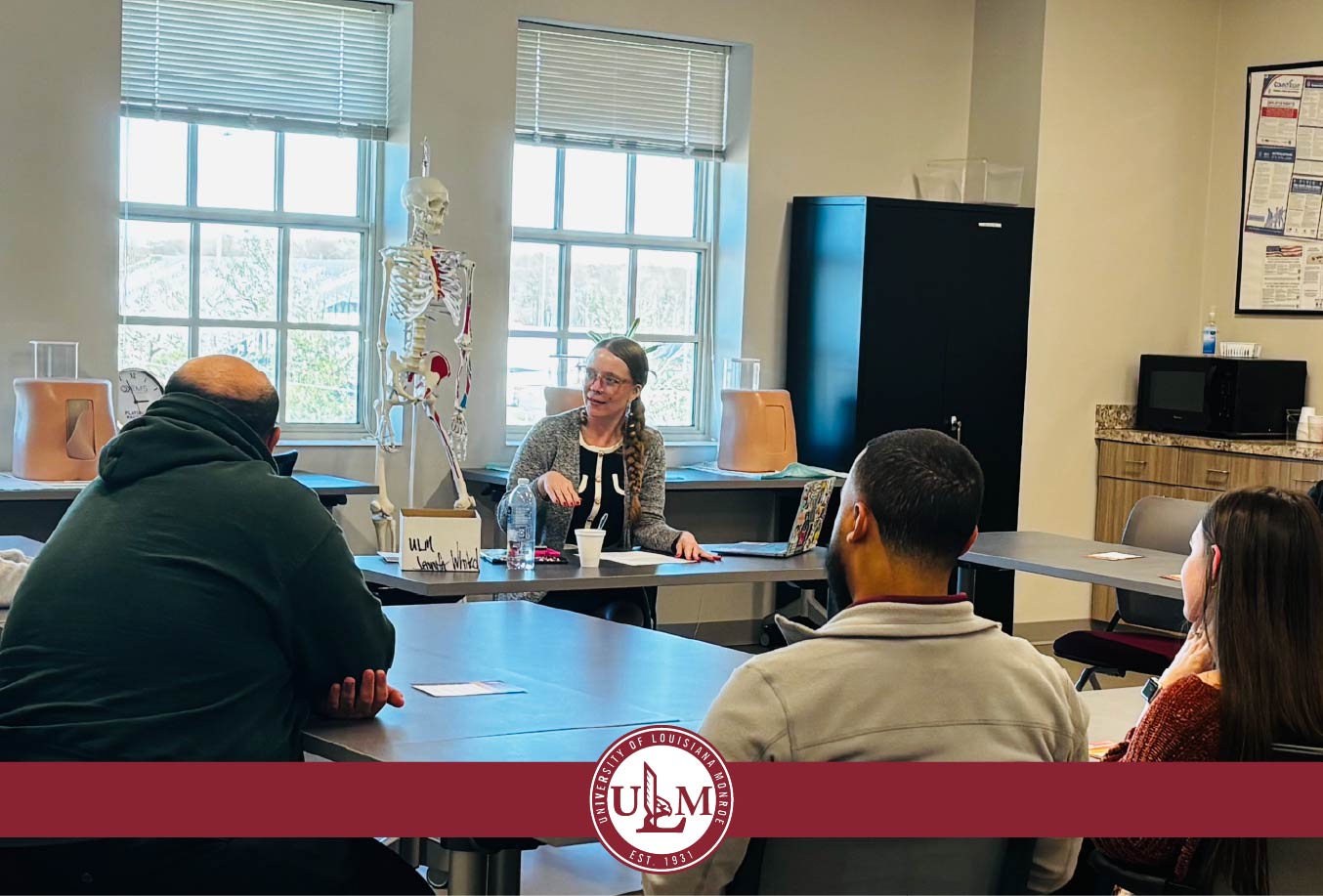
Attendees listen to a presentation by Dr. Terry Jones, professor of history at the University of Louisiana at Monroe, about the role of the "Louisiana Tigers" in the America Civil War Sept. 26 during "Discover ULM's Excellence" Brown Bag luncheon.
The two soldiers, who were shot by 12 men picked from their own unit, were brought up on mutiny charges following a riot in which they and other "Tigers" participated.
Rosters from the time period show that at least 24 nationalities and men from all social classes were represented on Louisiana's rolls during the Civil War.
The regiments were filled with men who not only pulled shenanigans at camp, but also took their raucous ways to the streets around the encampments.
These escapades were tolerated, Jones explained, because they were outweighed by the intensity in which the "Tigers" fought while in the heat of battle.
"They became the best fighters in the Confederate Army," said Jones. "And they played a major role in some of the biggest battles."
No less a commander than Stonewall Jackson is said to have given credit to the "Tigers" for his victory at Shenandoah Valley.
The "Tigers" also broke the battlefield line at Gettysburg and were in the thick of fighting during the Battle at Antietam, the bloodiest single-day battle of the war, Jones said.
"Today the name still lives on," said Jones. "Nicholls State University is named for Francis Nicholls, a Confederate Brigadier General from Louisiana."
Jones said the LSU mascot was also named after the battle-hardened soldiers known as the "Louisiana Tigers," but evolved into its current Bengal tiger form by the 1940s.